
Choosing the right boat fender types is critical for the safety and efficiency of your tug operations. This comprehensive guide breaks down the five most popular tug boat fenders—Cylindrical, Block, M, W, and D-type—detailing their unique designs, optimal applications, strengths, and limitations. As a trusted rubber fender manufacturer, Tonly provides the insights you need to make an informed decision.
Tug boat fenders are high abrasion resistance rubber fenders used to protect the vessel and the other surface during contact. Boat fenders are also known as boat bumpers, rubber fenders and marine fenders. For starters, tug boat is a type of boat that maneuvers vessels by towing or pushing them. These boat fenders possess excellent resilience properties and is highly durable due to its great sea water resistance. Port owners and tug boat owners are definitely very familiar with such boat fenders as it absorbs the energy during contact and protects the both colliding surfaces.
Tug boat fenders can actually be categorised into 4 main types where each serves a different application. The type and number of fenders depends on the size and arrangement of the tug boat itself.
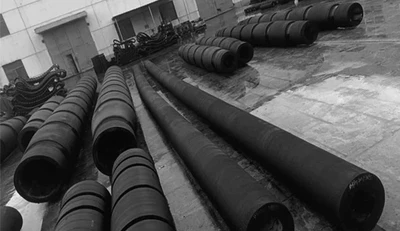
Design & Features: The most versatile and widely used of all boat fender types, cylindrical fenders feature a simple, robust round design. They are typically mounted longitudinally along the bow or stern using a central support chain system fitted into grooves.
Key Advantages:
Multi-directional Protection: Effective from various impact angles.
Excellent Energy Absorption: Provides progressive resistance.
Ease of Installation & Maintenance: Simple design allows for easy rotation to even out wear.
Cost-Effectiveness: Often provides the best value for general-purpose applications.
Ideal For: General harbor tugs, operations involving contact with flared hulls, and ship-to-ship (STS) operations in variable conditions. Sizes are highly adaptable to different vessel sizes.
Explore Tonly's Cylindrical Rubber Fenders
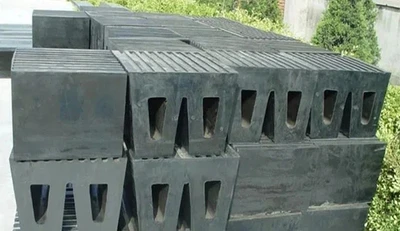
Block fenders are also known as cube boat bumpers for some. Mainly preferred for their great grip as a result of balanced grooved surfaces. This traditional shaped fender has a large contact surface that results in low hull pressures, making it even more suitable for heavy-duty applications. An optional UHMW-PE face is mostly available.
Tugs that operate in heavy swell and storm conditions therefore prefer block boat fenders most of the time.
M-Fenders are installed to the bow and the aft part of tug boats to protect the vessel from damages during operation. The fenders’ large flexible surface area that minimises the pressure acted upon the vessel during pushing and pulling operations can be fitted around tight curves. Similar to block fenders, M-shaped boat bumpers provide extra grip with their grooved surface while the triple “legs” acts as a strong attachment to the vessel.
M-shaped rubber fenders have a relatively low weight and this attribute contributes to a better tug stability. Due to its heavy duty design and strong attachment, M-shaped is one of the most popular rubber fenders.
W-shaped Fenders have an extreme-duty design that is for even the most extreme operating conditions. It is definitely one of the most commonly used boat bumper for tugs today. Fenders can be installed around the curves of most hull shapes and effectively buffer the collision between docks and ships. Tensile strength is highly customisable according to client’s requirements.
Ocean-going tugs and large harbor tugs are the most common applications for W-fenders.
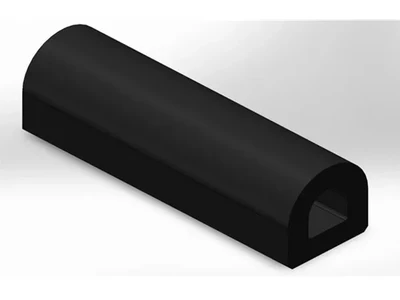
D rubber fender fenders are are also commonly found on tug boats. But they are usually specified with their signature “D” shaped and comes with different bores.
There is no single “most durable” type for all situations, as durability depends on the specific operating conditions. However, W-type fenders are often considered the most robust for extreme-duty applications due to their arch design, which distributes stress effectively and handles high-energy impacts. For general-purpose durability with excellent wear resistance, Cylindrical rubber fenders are a top choice because their symmetrical shape allows for even wear distribution and rotation. Ultimately, the most durable fender is the one correctly specified for your tug’s size, primary operations (e.g., pushing vs. docking), and environmental conditions.
Learn more about our heavy-duty options: Explore W-Fenders
Replacement intervals depend on usage intensity, material quality, and environmental exposure. High-quality rubber fenders, like those from Tonly, typically last 8 to 15 years under normal operating conditions. Key signs that indicate replacement is needed include:
Deep cracks
Permanent deformation
Chunking or severe surface wear exposing inner layers
Hardening of the rubber, which reduces energy absorption
Regular visual inspections every 3-6 months are recommended. For a detailed maintenance checklist, read our guide on How to Inspect Marine Fenders.
 Unleashing the Power of Tug & Boat Rubber FendersOctober 17, 2024Tug & Boat Rubber Fenders are essential components in the maritime industry, providing critical protection for vessels during docking and maneuvering. Tonly Rubber, a reputable brand known for its...view
 Cylindrical Rubber Fender & Dock: The Guardian of Marine SafetyOctober 17, 2024In the bustling world of maritime operations, the safety of vessels and docks is paramount. Enter the Cylindrical Rubber Fender & Dock—a robust protector designed to absorb the shocks and stresse...view
 Boat Side Rubber Fender Installation Guide: How to Ensure Optimal ConfigurationDecember 17, 2025When it comes to the protection of boats and other maritime vessels, the installation of a boat side rubber fender is crucial. These fenders serve as buffers between a boat and a dock, ensuring the sa...view
 Requirements for the construction of rubber fendersDecember 16, 20241. All construction teams must follow the various management plans of the project department,comply with management,and achieve safe production and civilized construction.2. On-site construction worke...view
 English
  français
  Español
  русский
  Türkçe