
With the development of China's shipping industry, the demand for marine and terminal fenders continues to increase. Among them, marine rubber fenders are the most widely used for toughness and impact resistance. At present, there are many related manufacturers in China, and their products are mixed. Some manufacturers are subject to market competition. One-sided low-cost competition is the main method, and they do not strictly abide by relevant standards and procedures, use low-quality raw materials or use excessive recycling. Adhesives used to save costs provide great potential for terminal and ship safety.
Relevant experts said that manufacturers of marine rubber fenders should strengthen relevant national standards, improve innovation capabilities, strict technological processes, and provide reliable and safe products. It is understandable that many types of rubber fenders are commercially available, including buckle type, inflatable type, cross bar cylindrical type (drum type), butt V type (ie X type) and flexible pile type.
Manufacturers need to improve the hull and docking components, and then transform the fender. The deformation of the fender, the relative stiffness, and the non-positive thrust of the hull are many factors, such as the influence of energy absorption, the fender slows down the speed of the ship’s eyepiece, and the fender. The coefficient of friction between the side system and the hull, the cost of infrastructure investment and maintenance of the system and components, and the method of contact with the hull fender. Users can choose various types of fenders.
For the shipbuilding main engine, shipboard and other supporting markets in the shipbuilding industry, the marine rubber fender market is highly competitive. China's annual sales of rubber fenders exceed 100 million yuan, and there are mainly 3-4 backbone ports and shipbuilding companies. More customized products, good efficiency and high market share. Some manufacturers that produce more general-purpose products and low profits can only adopt low-cost competitive strategies, and it is not long-term to use inferior materials to save money.
 The Material Characteristics of UHMWPE FendersSeptember 24, 2025UHMWPE fenders use ultra-high molecular weight polyethylene (UHMWPE) material, which has been widely used in the field of ship protection due to its excellent performance. Compared with traditional in...view
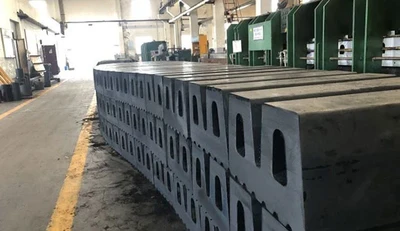 Four methods to repair damaged tug fenderDecember 16, 2024The main raw materials of tugboat fenders are natural rubber compound and rubber nylon cord, which can avoid tearing, damage, scratching, puncture and other parts during use. Our rubber fenders are re...view
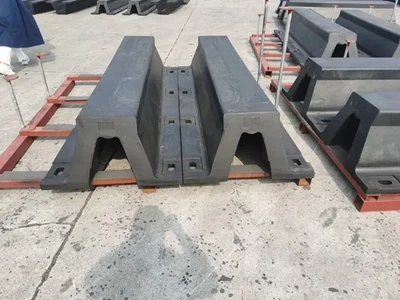 How Arch rubber fenders Contribute to Docking SafetyDecember 17, 2025When it comes to maritime safety, ensuring secure and efficient docking is a top priority. One of the key elements in safeguarding both vessels and docking infrastructure is the use of high-quality fe...view
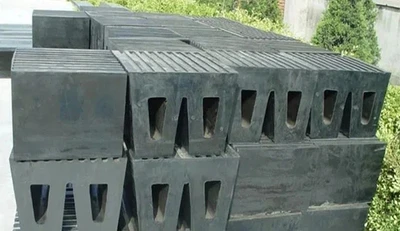 Unleashing the Power of Tug & Boat Rubber FendersOctober 17, 2024Tug & Boat Rubber Fenders are essential components in the maritime industry, providing critical protection for vessels during docking and maneuvering. Tonly Rubber, a reputable brand known for its...view
 English
  français
  Español
  русский
  Türkçe