
In the demanding world of marine infrastructure, where ports, docks, and vessels face constant impacts from waves, tides, and berthing operations, protection systems have evolved significantly. While traditional rubber fenders have served the industry for decades, a new generation of composite rubber fenders is revolutionizing how we protect marine assets. As a leading composite fender manufacturer with over 60 years of engineering expertise, Tonly has been at the forefront of this technological shift, developing solutions that address the limitations of conventional designs.
But what exactly are composite rubber fenders, and why are they increasingly becoming the preferred choice for modern maritime applications? This comprehensive guide will explore their composition, advantages, and how they compare to traditional rubber fenders.
A composite fender is an advanced marine protection device that combines multiple materials to create a superior performance product. Unlike traditional fenders made primarily from rubber, composite fenders integrate:
High-Grade Rubber Core: Specially formulated elastomers designed for optimal energy absorption and compression recovery
Advanced Composite Materials: Typically fiber-reinforced polymers (FRP), synthetic fabrics, or engineered plastics that form a protective outer shell
Structural Reinforcements: Internal or external elements that enhance tensile strength and dimensional stability
The most effective designs, like Tonly's Trapezoidal Composite Rubber Fender, strategically position these materials to maximize their respective strengths: the rubber handles energy dissipation through compression, while the composite components provide structural integrity, impact resistance, and environmental protection.
Traditional Rubber Fenders: Susceptible to UV degradation, ozone cracking, and abrasive wear
Composite Rubber Fenders: The outer composite layer acts as a protective barrier, significantly reducing environmental damage. Tonly's composite fenders demonstrate 2-3 times longer service life in harsh marine environments compared to conventional designs.
Traditional: Heavy solid rubber construction increases handling and installation challenges
Composite: Engineered materials provide equal or greater strength with reduced weight. This translates to easier installation, lower shipping costs, and reduced stress on mounting structures.
Traditional: Energy absorption primarily through homogeneous rubber compression
Composite: Strategic material placement creates optimized compression zones. The trapezoidal shape of Tonly's composite fenders provides 15-25% greater energy absorption per unit volume compared to standard D-shaped rubber fenders.
Cost Factor | Traditional Rubber Fender | Composite Rubber Fender |
Initial Purchase | Lower | Higher |
Installation | More complex (heavier) | Simplified (lighter) |
Maintenance Frequency | Every 2-3 years | Every 5-8 years |
Replacement Cycle | 7-10 years | 15-20 years |
10-Year TCO | Higher | 30-40% Lower |
Traditional: Limited to rubber compound variations
Composite: Multiple variables can be engineered: composite layer thickness, fiber orientation, rubber hardness gradients, and geometric optimization. As a specialized composite fender factory, Tonly tailors these parameters to specific application requirements.
Traditional Rubber Fenders:
Homogeneous rubber (natural or synthetic)
Sometimes steel plate reinforcement
Vulcanized as single unit
Limited resistance to environmental factors
Composite Rubber Fenders:
Multi-layer construction
Rubber core + composite shell + optional wear plates
Bonded or co-vulcanized layers
Each layer optimized for specific function
For High-Impact Commercial Ports:
Traditional: May experience cracking under continuous heavy impacts
Composite: Distributed stress across composite layers prevents catastrophic failure. Tonly's designs handle repeated impacts from vessels up to 200,000 DWT without performance degradation.
In Corrosive Marine Environments:
Traditional with steel plates: Steel corrosion can compromise integrity
Composite: Non-corrosive materials maintain structural integrity. Essential for saltwater ports and offshore applications.
For High-Frequency Berthing Operations:
Traditional: Surface wear requires frequent maintenance
Composite: Hard outer layer resists abrasion. Ideal for ferry terminals, tugboat berths, and workboat docks.
Installation:
Traditional: Heavy equipment often required
Complex mounting for large units
Longer installation time
Composite: Lighter weight enables manual handling
Simplified mounting systems
Reduced installation time and cost
Maintenance Requirements:
Traditional: Regular inspection for cracks, wear, and corrosion (if steel-reinforced)
Composite: Minimal maintenance; primarily visual inspections for surface damage
Documented Cases: Tonly's composite fenders at a European container terminal reduced annual maintenance hours by 65% compared to previously used traditional fenders.
As an industry-leading composite fender manufacturer, Tonly brings distinctive expertise to composite fender production:
In-house material compounding laboratory
Dedicated composite material processing
Specialized vulcanization technology for bonding dissimilar materials
Complete quality control throughout manufacturing
Custom-engineered polymer matrices
Optimized fiber orientations for impact resistance
Advanced bonding systems between rubber and composite layers
UV-stabilized and chemical-resistant formulations
Extensive laboratory testing (compression, shear, tension)
Finite element analysis (FEA) for design optimization
Real-world performance monitoring in installed applications
Compliance with international standards (PIANC, ISO)
Temporary or low-budget installations
Low-frequency berthing operations
Freshwater environments with minimal temperature fluctuations
Small recreational vessels with low kinetic energy
High-traffic commercial ports with frequent vessel movements
Corrosive environments (saltwater, chemical exposure)
Extreme temperature zones with significant seasonal variation
Offshore installations with limited maintenance access
Retrofit projects where weight reduction is critical
Specialized vessels requiring customized performance profiles
The maritime industry's shift toward composite rubber fenders reflects broader trends toward:
Sustainability: Longer lifespan reduces material consumption and waste
Operational Efficiency: Reduced maintenance minimizes dock downtime
Safety Enhancement: Predictable performance under extreme conditions
Cost Optimization: Lower total cost of ownership despite higher initial investment
At Tonly, our Trapezoidal Composite Rubber Fender represents the culmination of this evolution—combining geometric optimization with material science to deliver protection that traditional rubber fenders cannot match.
The decision between traditional and composite rubber fenders ultimately depends on your specific operational requirements, environmental conditions, and long-term economic considerations. While traditional fenders may suffice for simple applications, the proven benefits of composite technology make it the intelligent choice for demanding, high-value marine infrastructure.
Key Takeaway: Composite rubber fenders aren't just an alternative to traditional designs—they represent a fundamental improvement in marine protection technology, offering superior performance, reduced lifecycle costs, and enhanced durability that justifies their adoption across an expanding range of applications.
As a trusted composite fender supplier with global project experience, Tonly provides more than just products—we offer engineered solutions backed by technical expertise. Whether you're protecting a small marina or a major international port, our team can help you determine if composite fenders are right for your application.
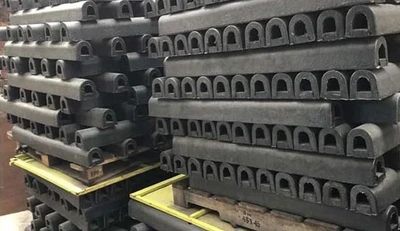 How to improve the wear resistance of D-type rubber fender?December 16, 2024The method to improve the wear resistance of Type D rubber fender is as follows:a. Choose polyurethane rubber, natural rubber, butadiene rubber, styrene butadiene rubber, neoprene rubber, nitrile rubb...view
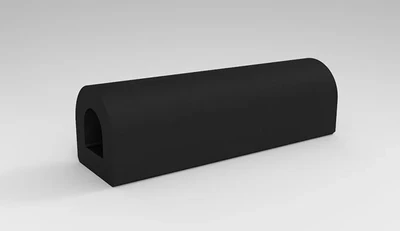 Stability of D-type rubber fenderDecember 16, 2024The quality of D-type rubber fenders always restricts production and use, interferes with docking and the safety of ship drivers, and affects the schedule of production ships. This is not an accidenta...view
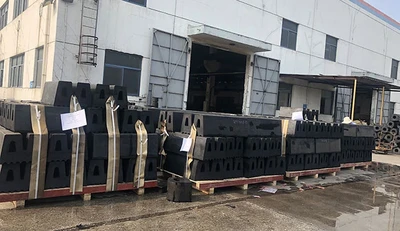 The importance of vulcanization pressure for rubber marine fendersDecember 16, 2024The vulcanization pressure refers to the pressure per unit area of the rubber product during the vulcanization process. Except for thin-walled products such as tape, other rubber products require a ce...view
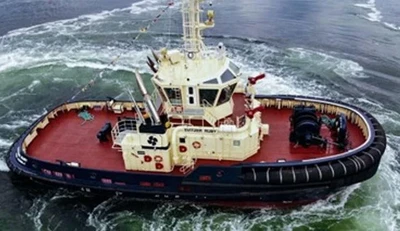 Installation of Rubber fender in ShipbuildingDecember 16, 2024view
 English
  français
  Español
  русский
  Türkçe