
1. Ship overloaded
This kind of damage often occurs in rubber fenders, especially some old rubber fenders, which often crack at the weak points of the structure. The cracks are generally along the length of the rubber fender. D-type and V-type fenders are more common. The main reason for the cracking of the rubber fender is that the kinetic energy of the ship hitting the fender is too large, which exceeds the load that the rubber fender can withstand. The reason for the excessive kinetic energy of the ship's impact is the excessive speed and angle of the ship. Especially when the berthing angle is large, the bow of the ship contacts the pier and the rubber fender before the middle of the hull, causing strong impact kinetic energy to concentrate on one or several fenders, causing damage to the rubber fender. In addition to the above reasons, the ship's impact function is too large. There are also ships that are berthed at the docks larger than the designed ship type and tonnage, and the impact of wind and waves on the ship.
2. Poor anchorage and connection
This situation has occurred in all types of rubber fenders. The rubber fender is loose, out of position, falling off into the sea and other abnormal phenomena. The main reason for this phenomenon is that the bolts or iron chains that anchor the fender are in poor technical condition, or the maintenance has not kept up. Metal materials such as anchor bolts and iron chains for fixing the fender corrode very quickly in the marine environment and are not easy to replace, resulting in poor fixing of the rubber fender, which seriously affects the normal use of the fender. Although some anchor bolts are designed to consider replacement conditions, they are often not ideal in actual use. For example, V-shaped rubber fender anchor bolts are in the form of embedded bolt boxes. The original design intent was to facilitate the repair and replacement of anchor bolts, but in actual use, it cannot be replaced due to iron corrosion, bolt deformation and other reasons, which affects the quality of the rubber fender fixing, causing the fender to fall off and damage.
3. Friction damage
This situation generally occurs in fixed V-type and D-type rubber fenders. Fenders are mainly damaged by corners, cracks, and surface scratches. The main reason for this damage is that the friction between the rubber fender and the ship is too large. When the ship arrives at a higher tangential speed, the contact part of the rubber fender and the hull is forced to move forward with the ship due to excessive friction, causing the fender to be sheared and damaged. In addition, during the mooring operation, the ship sometimes needs to move forward and backward, and the ship shakes left and right or up and down caused by waves and currents. In this case, when the coefficient of friction between the ship and the rubber fender is larger than 0.4 (for example, the mooring rope is too tight), it may cause damage to the fender.
To ensure long-term dock safety, understanding the relationship between damage types and their root causes is essential. Below is a quick reference guide:
| Damage Type | Primary Root Cause | Commonly Affected Models | Recommended Engineering Solution |
| Cracking / Splitting | Overloading / Excessive Berthing Speed | V-Type, D-Type | Upgrade to models with higher energy absorption or reinforce with internal layers. |
| Detachment (Falling Off) | Bolt Corrosion / Poor Fixing Maintenance | All Fender Types | Implement a 6-month inspection cycle; use high-grade galvanized or stainless steel hardware. |
| Surface Shear & Tears | High Friction ($> 0.4$) during Mooring | Fixed Fendering Systems | Install low-friction UHMW-PE Facing Pads to reduce lateral stress. |
| Edge Deformation | Improper Berthing Angle | Cylindrical, Square | Adjust fender layout or install frontal frames to distribute impact force. |
Longitudinal cracking in V-type rubber fenders is typically caused by over-compression during berthing. When a vessel strikes the fender at an excessive angle or high speed, the concentrated kinetic energy exceeds the rubber's structural design limit. This intense localized pressure forces the rubber to split along its weakest points, usually resulting in cracks that run parallel to the fender's length.
We recommend a comprehensive professional inspection every 6 to 12 months. Your maintenance team should focus on four critical areas:
Anchor Bolt Tension: Ensure no bolts have loosened due to vibration.
Chain Integrity: Check for corrosion or wear in the tension and weight chains.
Rubber Fatigue: Look for surface "crazing" or deep structural cracks.
UV & Chemical Degradation: Check if the rubber has become brittle due to prolonged sun exposure or oil contact.
Once a fender shows structural cracks or loses its mounting stability, its energy absorption capacity is significantly compromised. Using a damaged fender increases the risk of "bottoming out," where the impact force is transferred directly to the dock wall, potentially leading to catastrophic structural failure of the pier.
Not necessarily. While some surface fading is normal due to UV exposure, deep chalking or hardening indicates that the rubber's antioxidant properties are failing. If the surface becomes brittle, it is much more susceptible to friction damage and tearing.
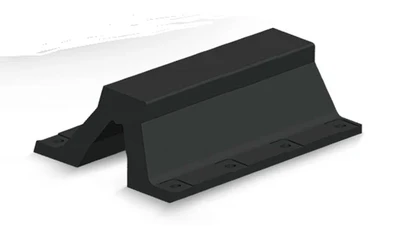 Protecting Your Vessel with Tonly's Tug & Boat Rubber Fender and Dock Rubber FenderMay 12, 2023When it comes to safeguarding your boat or ship, the importance of high-quality marine fender systems cannot be overstated. These protective devices serve as the first line of defense against collisio...view
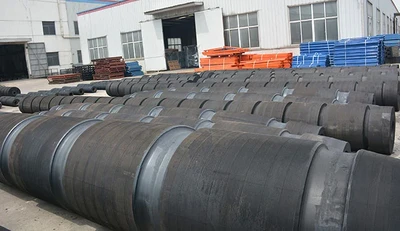 How to choose the right raw material for rubber fenders?December 16, 2024The choice of rubber fender material is a technical one, allowing the selection of a variety of raw rubber and compounding agent varieties and amounts suitable for the mixing, rolling, moulding and vu...view
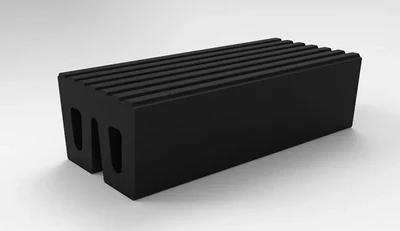 W-type rubber fender performance advantagesDecember 16, 2024W-type rubber fender application: usually fixed on the steel structure shock-proof board with bolts and nuts, there are exceptions, it is directly fixed on the cement wall of the wharf, shock-proof wo...view
 Cylindrical vs. Other Fender Types: Your Complete Comparative GuideDecember 17, 2025Introduction: Choosing the Right Marine ProtectionSelecting the appropriate rubber fenders for marine applications requires understanding how different designs perform under specific conditions. While...view
 English
  français
  Español
  русский
  Türkçe