
As global maritime trade intensifies, the pressure on port infrastructure has never been higher. For modern terminals handling ULCCs (Ultra Large Crude Carriers) and Post-Panamax vessels, the choice of fendering system is a critical safety and financial decision. Super Cell Fenders remain the industry standard for high-traffic ports due to their unmatched energy absorption-to-reaction ratio.
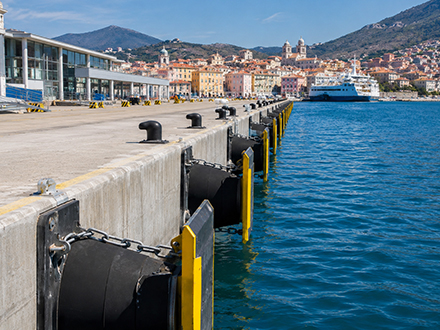
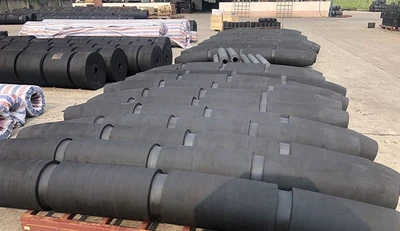
The Super Cell Fender is an improved version of the traditional cell fender, featuring a circular rubber body and integrated steel mounting plates. Its design is optimized to handle multi-directional impacts, which is common in large-scale docking maneuvers.
As a specialized marine fender manufacturer, Tonly designs these fenders to provide high energy absorption while maintaining a low reaction force, protecting both the quay wall and the vessel hull from structural damage.
Structural Stability: The large mounting base provides exceptional resistance to shear forces.
Longevity: Designed to withstand the rigors of 24/7 port operations in harsh marine environments.
When optimizing for marine rubber fendering, it’s essential to understand the efficiency gains of the "Super" profile.
Parameter | Standard Cell Fender | Super Cell Fender (Tonly) | Benefit |
Energy Absorption | Baseline | +15% to 20% Higher | Handles larger vessels safely |
Reaction Force | Standard | Lower per kJ absorbed | Reduces stress on the dock |
Max Compression | 45% - 50% | Up to 52.5% | Higher safety margin |
Durability | High | Superior (Reinforced Base) | Lower lifecycle costs |
In high-traffic ports, the "rubbing" action of a berthing ship can quickly wear down even the toughest rubber. This is why most Super Cell systems are equipped with a steel frontal frame and UHMWPE Marine Fender Pads.
By integrating rubber fenders with UHMW-PE plates, port operators can:
Reduce Friction: The low-friction surface of UHMW-PE allows ships to slide smoothly during berthing.
Increase Lifespan: Protects the rubber cell from direct abrasion and environmental wear.
Enhance Safety: Ensures predictable performance during "High-Impact" scenarios.
For more on material selection, read our guide on how to choose the right raw material for rubber fenders.
To build a comprehensive port protection strategy, it is often necessary to combine different profiles. While Super Cell Fenders handle the primary berthing, Keyhole Fenders (as discussed in our previous article) are often used for smaller workboat berths or as auxiliary protection.
If your project involves specialized vessels, you may also consider Arch SA Rubber Fenders for their simple, robust design in medium-sized terminals.
A: Its circular design provides multidirectional stability and the highest energy-to-reaction ratio of any fender type. This is crucial for large ships where a high reaction force could damage the hull or the port's concrete structure.
A: As a China rubber fender factory with global reach, Tonly's products undergo rigorous testing. We provide BV Factory Certificates and ABS assessments to guarantee performance under extreme conditions.
A: While the rubber unit itself is highly durable, the frontal frames or pads may need maintenance. You can refer to our guide on repairing damaged fenders or consult our team for replacement parts.
Need a Professional Port Solution? Tonly is a leading marine fender supplier dedicated to providing high-performance, cost-effective solutions for the world's busiest ports. Contact us today for technical drawings or a custom quote for your next maritime project.
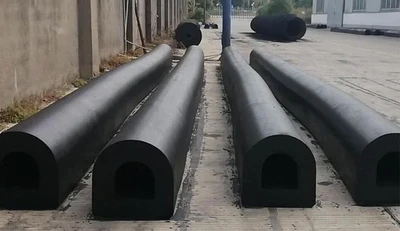 Exploring Marine Safety Solutions: Square Type Rubber Fender, UHMWPE Marine Fender, and DO Type Rubber Fender by TonlyJune 13, 2023Marine operations demand robust and reliable fender systems to ensure the safety and longevity of vessels and port infrastructures. Today, we delve into three specific kinds of fenders: the Square Typ...view
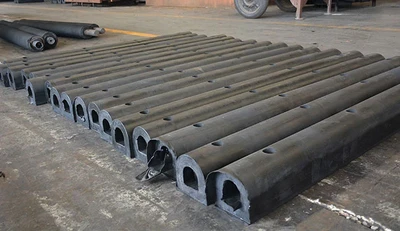 Transportation method of tug fenderDecember 16, 2024If many customers choose tug fenders, transportation is the key. How to choose the transportation method that suits you is a problem that needs to be solved.(1) Deflated air transportationAdvantages: ...view
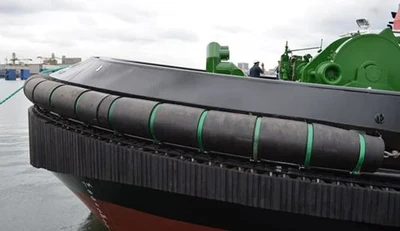 Five types of popular tug boat fendersDecember 16, 2024Tug boat fenders are high abrasion resistance rubber fenders used to protect the vessel and the other surface during contact. Boat fenders are also known as boat bumpers, rubber fenders and marine fen...view
 Commonly used Ten types of rubber fendersDecember 16, 20241 GD type rubberl Smaller bottom width size, especially suitable for framed docksl High energy absorption and high reaction force.l High installation strength and long service life.2. Super Dru...view
 English
  français
  Español
  русский
  Türkçe