
A fender panel is a frame made primarily of steel, which is fixed to the front of a rubber fender to lower the average face pressure. A rubber fender with a panel has the disadvantages of complex design due to the increase in the number of system parts such as the panel, pads and chains; however, it also has several advantages, as listed. With the increase in the size of vessels, several large fenders have been equipped with fender panels.
(1) The average hull pressure can be adjusted.
(2) The rubber is not in direct contact with the vessel hull.
(3) The system demonstrates satisfactory performance, even in the case of partial contact with projections on the hull.
(4) It is possible to adjust the panel length and number of fenders per panel.
The shape of marine rubber fenders varies depending on the rubber fender manufacturer . Several examples are shown in the following pictures.
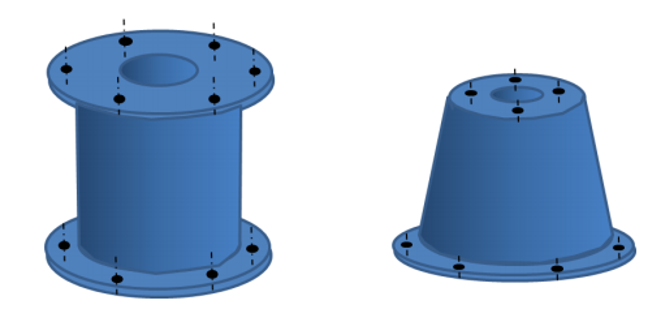
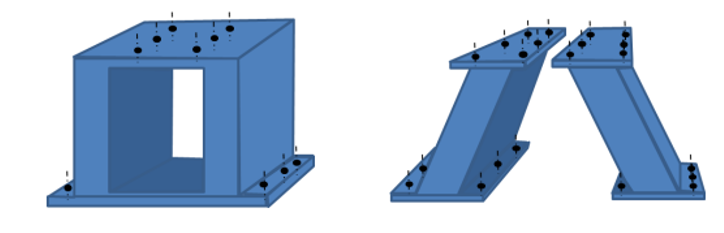
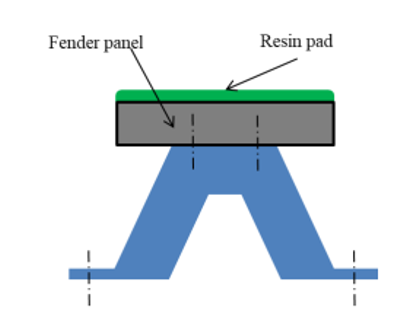
There are no specific criteria regarding whether a rubber fender should be fitted with fender panels. Panels are often installed if there is an allowable limit for the hull pressure. The considerations for hull pressure are described. Even if there is no restriction regarding the hull pressure, a fender panel may be required when a large contact area is required, for example, in the case of fenders for ferries
 D Type Rubber Fenders with Fender FrameDecember 16, 2024view
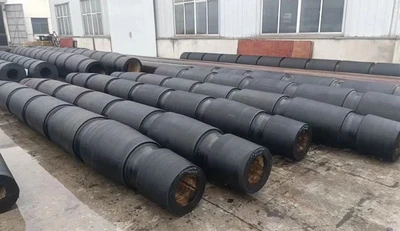 Exploring Tonly's Superior Fender Solutions: Cylindrical, D Type, and W Type Rubber FendersJune 13, 2023When it comes to ensuring the safety and longevity of both vessels and marine structures, choosing the right fender system is crucial. Fenders act as the first line of defense, absorbing impacts and m...view
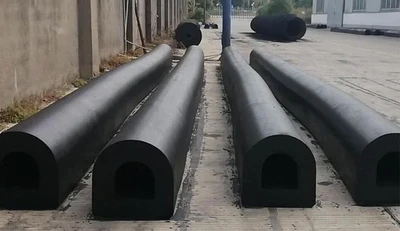 Exploring Marine Safety Solutions: Square Type Rubber Fender, UHMWPE Marine Fender, and DO Type Rubber Fender by TonlyJune 13, 2023Marine operations demand robust and reliable fender systems to ensure the safety and longevity of vessels and port infrastructures. Today, we delve into three specific kinds of fenders: the Square Typ...view
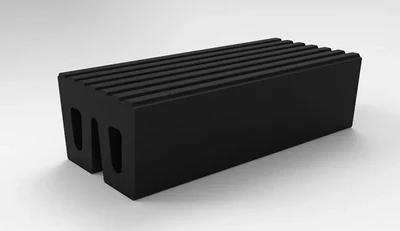 W-type rubber fender performance advantagesDecember 16, 2024W-type rubber fender application: usually fixed on the steel structure shock-proof board with bolts and nuts, there are exceptions, it is directly fixed on the cement wall of the wharf, shock-proof wo...view
 English
  français
  Español
  русский
  Türkçe