
V-type rubber fenders are considered as rubber fenders without fender panels. A V-type rubber fender has a V-shaped cross section with steel plates embedded in the fixing flange portion for installation. The fender has the same cross-sectional shape in the longitudinal direction. Since the rubber comes in direct contact with the vessel hull,partial damage is likely to occur. Energy absorption occurs only due to the contact length, and the contact pressure is high.
Although these are notable disadvantages, V-type rubber fenders have the following advantages.
(1) The application range is wide because the length can be adjusted.
(2) Since such fenders exhibit buckling-type performance, the energy absorption is large even for small-sized fenders.
V-type rubber fenders were widely used as the first rubber fenders with buckling-type performance. The typical cross-sectional shapes and installation of V-shaped rubber fenders are shown in Fig
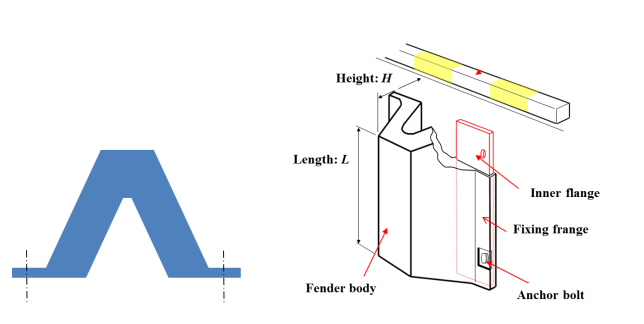
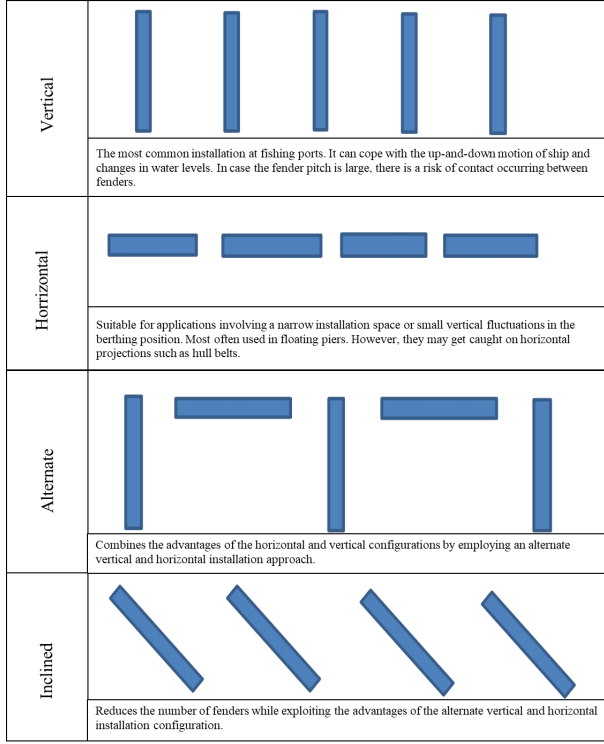
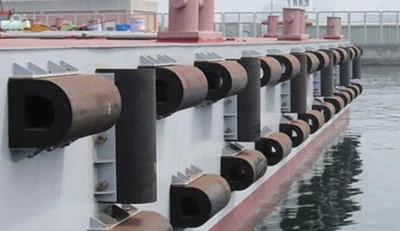
V-type rubber fenders can be widely applied according to the conditions of ports and vessels by changing the length and mounting arrangement. Typical mounting arrangements ship has a belt on the hull, the effective berthing energy can be absorbed by the horizontal fenders, although the hull belt may ride on the fender and damage it. Furthermore, in the case of vertical installation, if a horizontal hull belt is present,the load is concentrated since contact occurs only at the intersection.
In such a case, alternate vertical and horizontal installation can be employed; the effective berthing energy is absorbed by the horizontal fenders, while the vertical fenders prevent the belt from being lifted. Alternatively, the rubber fenders with panels, as described in the previous section, can be applied.
 The importance of vulcanization pressure for rubber marine fendersDecember 16, 2024The vulcanization pressure refers to the pressure per unit area of the rubber product during the vulcanization process. Except for thin-walled products such as tape, other rubber products require a ce...view
 Cost strategy of marine rubber fenderDecember 16, 2024With the development of China's shipping industry, the demand for marine and terminal fenders continues to increase. Among them, marine rubber fenders are the most widely used for toughness and im...view
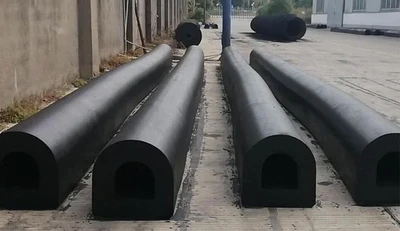 Exploring Marine Safety Solutions: Square Type Rubber Fender, UHMWPE Marine Fender, and DO Type Rubber Fender by TonlyJune 13, 2023Marine operations demand robust and reliable fender systems to ensure the safety and longevity of vessels and port infrastructures. Today, we delve into three specific kinds of fenders: the Square Typ...view
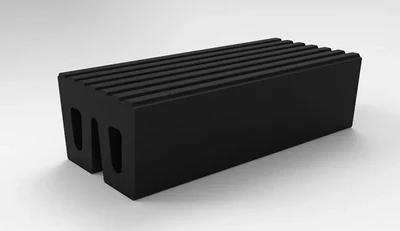 W-type rubber fender performance advantagesDecember 16, 2024W-type rubber fender application: usually fixed on the steel structure shock-proof board with bolts and nuts, there are exceptions, it is directly fixed on the cement wall of the wharf, shock-proof wo...view
 English
  français
  Español
  русский
  Türkçe