
The method to improve the wear resistance of Type D rubber fender is as follows:
a. Choose polyurethane rubber, natural rubber, butadiene rubber, styrene butadiene rubber, neoprene rubber, nitrile rubber and other rubber types with good wear resistance. Under general abrasion conditions, natural rubber is preferred, styrene-butadiene rubber is preferred at high temperatures, and butadiene rubber is preferred under severe conditions; b. In order to improve wear resistance, add activated carbon black with small particles; white fillers are best 20nm white carbon black. c. Softener is used to assist filler dispersion, generally not more than 5 parts; d. Adding antioxidant can improve the aging resistance of rubber materials and indirectly increase the wear resistance. Under general environmental conditions, the anti-aging agent AW has the best abrasion resistance in natural rubber, followed by the anti-aging agent D4010 and the anti-aging agent DH.
The microstructure of raw rubber has a great influence on wear. When there are conjugated double bonds in the molecular chain, the wear resistance of the D-type rubber fender can be improved. For example, when the benzene ring in styrene-butadiene rubber contains conjugated double bond groups, it will absorb and distribute external energy, making the macromolecular chain difficult to break. Therefore, although styrene butadiene rubber is inferior in elasticity, strength, bending resistance, and low temperature resistance, it has excellent wear resistance. Because polyurethane rubber contains conjugated benzene rings, it ranks among the top in abrasion resistance of various rubbers. Naturally, it is more than 4 times higher than styrene-butadiene rubber.
Compared with natural rubber, styrene-butadiene rubber has better abrasion resistance below 15 degrees, and styrene-butadiene rubber above 15 degrees has better abrasion resistance. When the abrasion resistance increases, the slip resistance decreases. Therefore, in the temperature range where elasticity is dominant, abrasion resistance and slip resistance have an opposite relationship. Due to the increase of reclaimed rubber and oily substances, the wear resistance is reduced. Different types have different effects on formulation performance. For example, although the amount of wear of HAF is low, if it has nothing to do with heat generation. In order to study the abrasion resistance of rubber compounds, it is also necessary to study the relationship between rubber compounds and carbon black.
 Characteristics and Applications of Arch Rubber FendersSeptember 24, 2025An arch rubber fender is a type of marine dock rubber fender commonly used in ports and docks. Due to its unique design and exceptional performance, it is widely applied for the berthing protection of...view
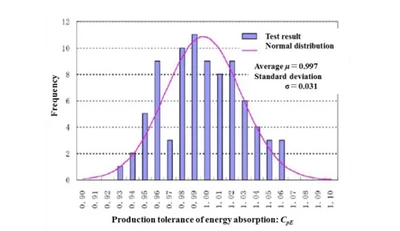 Performance of rubber fendersDecember 16, 2024In the design process, the performance of rubber fenders is considered in terms of deflection-reaction force characteristics in compression and the energy absorption calculated from these characterist...view
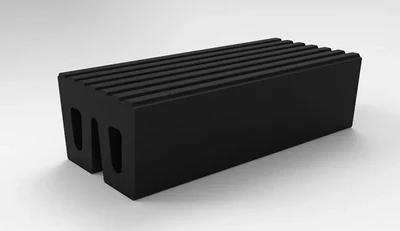 W-type rubber fender performance advantagesDecember 16, 2024W-type rubber fender application: usually fixed on the steel structure shock-proof board with bolts and nuts, there are exceptions, it is directly fixed on the cement wall of the wharf, shock-proof wo...view
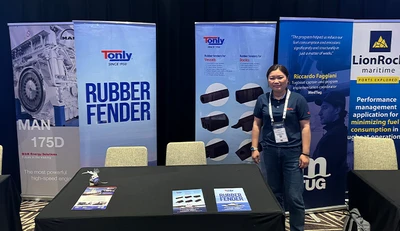 TONLY Participates International Tug & Salvage Community 2025March 11, 2025TONLY Participates International Tug & Salvage Community 2025view
 English
  français
  Español
  русский
  Türkçe