
At the same vulcanisation speed, general purpose rubber is fastest with natural rubber, followed by isoprene rubber, butadiene rubber, latex polybutadiene rubber and styrene butadiene rubber. Slow vulcanising rubbers using reduced sulphur and increased accelerators can be matched to natural rubber at the same vulcanising speed. In general, for the same vulcanisation speed, natural rubber is a high sulphur low accelerator, SBR is a low sulphur high accelerator and butadiene rubber is in between. The difference in vulcanisation speed of rubber is highly relevant to its molecular structure.
The different vulcanisation systems of natural rubber and chloroprene and butyl rubber are used together. Although the processing performance of the system can be improved, the performance of the vulcanised rubber obtained is below the average due to insufficient co-vulcanisation performance and satisfactory performance cannot be obtained. Co-vulcanisation with natural rubber can be improved by halogenating or increasing the unsaturation of butyl rubber. Suitable curing agents for natural rubber and neoprene are aldehydes, and the properties vary in a linear fashion. From the actual production, and with rubber co-vulcanization and dispersion inseparable.
The more uniform the dispersion between the materials of rubber fenders, the better the physical properties of vulcanisation, but most of the rubber is not uniformly dispersed, due to the different degrees of vulcanisation between the two phases, the interface between different rubber can cross-link, grafting and other factors, will have a decisive impact on the physical properties of vulcanised rubber. The reason for the deviation in the degree of vulcanisation between the two phases of the joint rubber is the solubility of the vulcanised rubber, which is added to the conventional formulation in greenhouse conditions in a dose close to the over-conserved or conserved state. In the vulcanisation temperature range, the degree of vulcanisation is not uniform between the two phases of the rubber due to the difference in solubility between the two phases, the uneven distribution of the vulcanising agent between the two phases, or the concentration difference.
 Main Types and Characteristics of Marine Rubber FendersSeptember 24, 2025Marine rubber fenders, often referred to as rubber buffers, are protective devices installed on docks or ships to effectively absorb the collision energy generated between ships and docks during berth...view
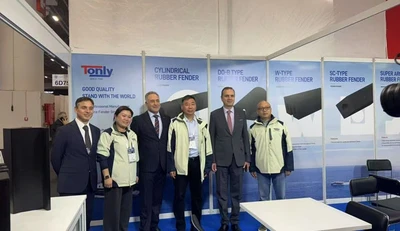 TONLY Participates 2025 Türkiye International Maritime ExhibitionMarch 11, 2025From February 18 to 21, 2025, TONLY participated in the Turkey International Maritime Exhibition held at Istanbul Exhibition Center in Istanbul. As one of the largest maritime exhibitions in Turkey, i...view
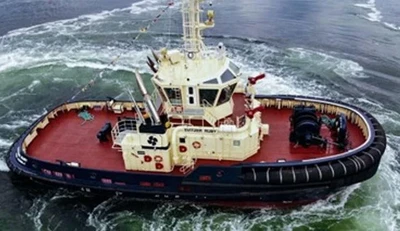 Installation of Rubber fender in ShipbuildingDecember 16, 2024view
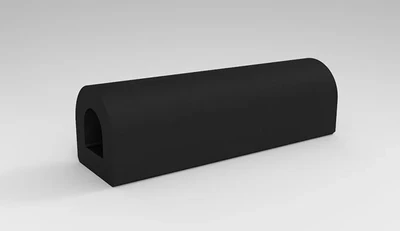 Stability of D-type rubber fenderDecember 16, 2024The quality of D-type rubber fenders always restricts production and use, interferes with docking and the safety of ship drivers, and affects the schedule of production ships. This is not an accidenta...view
 English
  français
  Español
  русский
  Türkçe