
D type and W type rubber fenders are two of the most prevalent and reliable solutions in marine fendering. While both serve the critical purpose of absorbing berthing energy, their distinct structural designs cater to different operational demands and vessel types. Understanding the characteristics and applications of D type rubber fenders and W type rubber fenders is crucial for port engineers, shipowners, and project managers to optimize safety and cost-efficiency. As a leading rubber fender manufacturer, Tonly provides this in-depth comparison to guide your selection process.
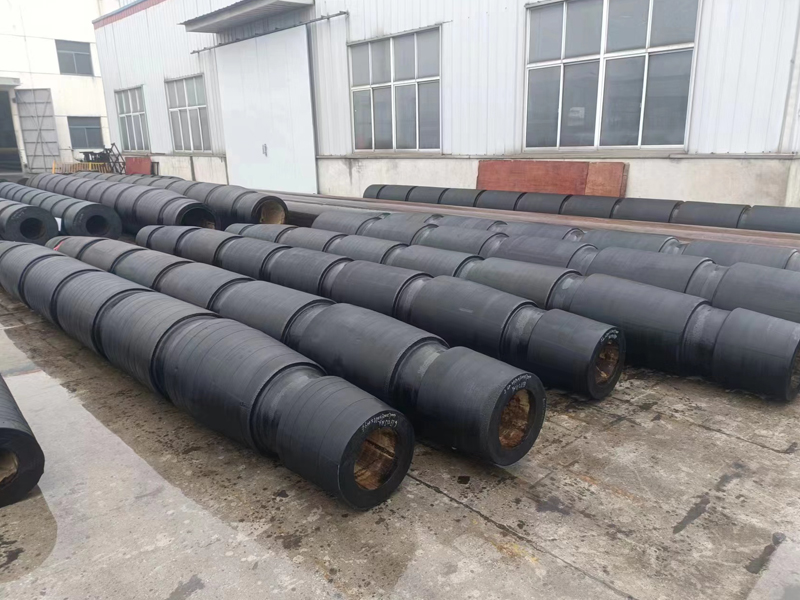
Tonly's cylindrical rubber fender is renowned for its versatility and exceptional impact resistance. These fenders can be used in a wide array of marine applications, from small boats to large docking structures. The cylindrical shape allows for high energy absorption, distributing impact forces evenly to minimize stress on both the vessel and the docking structure.
One of the standout features of Tonly’s Cylindrical Rubber Fender is its durability. Made from high-quality rubber, these fenders are resistant to harsh marine conditions, including UV rays, saltwater, and abrasion. Their long lifespan ensures a cost-effective solution for port operators and ship owners alike. With easy installation and low maintenance requirements, the Cylindrical Rubber Fender proves to be a reliable choice for a broad spectrum of marine activities.
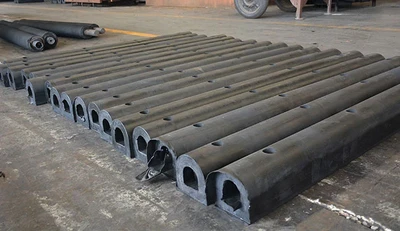
The d type rubber fender from Tonly is designed with performance optimization in mind. Its unique 'D' shape is engineered to offer maximum energy absorption and enhanced reaction force. This makes it particularly suitable for berths, piers, and marinas where robust protection is paramount.
Tonly's D Type Rubber Fender is not only efficient but also user-friendly. Its flat back facilitates straightforward installation against both flat and curved surfaces, making it adaptable to various docking configurations. Additionally, the compact design requires less space, making it ideal for locations with limited room, especially when installing rubber fender D-type systems. The D Type Rubber Fender's ability to provide dependable protection while conserving space underscores its innovative design. As a trusted partner among D rubber fender manufacturers, Tonly ensures every product delivers optimal performance and longevity.
For harsh environments and demanding applications, Tonly’s W Type Rubber Fender emerges as a top contender. The W shape, characterized by its multiple grooves and wide profile, allows for superior flexibility, enabling the fender to handle substantial impacts with grace. This design ensures high energy absorption while maintaining a lower reaction force, making it well-suited for large vessels and heavy-duty berthing operations.
The w type fender is crafted from premium-quality rubber materials, ensuring long-lasting performance even in rigorous conditions. The W rubber fender's robust construction is complemented by excellent resistance to wear and tear, standing up to repeated impacts without compromising on protective capabilities. By choosing Tonly’s W Type Rubber Fender, operators can benefit from a reliable and sturdy fender system that supports safe docking maneuvers.
To help port engineers and marine contractors maximize project ROI, Tonly provides a quick technical comparison of the structural behavior and mechanical performance of these three prevailing profiles:
| Fender Type | Energy Absorption | Reaction Force | Best Structural Application | Installation Characteristic |
| Cylindrical Fender | Progressive / Medium | Progressive / Medium | General cargo berths, bulk terminals, fishing ports | Extremely simple; hung via internal chains/bars. |
| D-Type Fender | High | Medium to High | Marinas, piers, tugboat bows, workboat belts | Flat back design; easily bolted to concrete or steel walls. |
| W-Type Fender | Ultra-High | Low to Medium | Ocean-going tugs, heavy-duty bows, extreme curves | Flexible profile; handles severe angular berthing with grace. |
A: Tugboats constantly push and pull large vessels under severe sea states, requiring fenders that can bend around the tight radius of a ship's bow without splitting. The W-type profile features unique center grooves that offer maximum flexibility and an extreme contact surface area under load, whereas cylindrical profiles are more prone to rolling or slipping during high-angle pushing maneuvers.
A: The primary cause of failure in D-rubber systems is excessive shear force during vessel dynamic movement. To drastically extend service life, port engineers can install low-friction front panels or ensure the rubber compounding includes high anti-ozone agents. For a deeper look into identifying and mitigating material degradation, check out our engineering analysis on the three common causes of damage to rubber fenders.
A: Yes. Tonly can manufacture customized pre-curved D-type and W-type profiles directly at our factory to fit the exact contours of your tugboat hull or circular dolphin structures. This ensures structural integrity and avoids unnecessary installation stress. To submit your engineering drawings or request a technical quote, please explore our complete fender solutions catalog or contact our technical team today.
Choosing the right fender system is essential for safeguarding marine vessels and infrastructure. Tonly offers a comprehensive range of fender solutions—including the Cylindrical Rubber Fender, D Type Rubber Fender, and W Type Rubber Fender—each designed to meet specific operational needs. With a focus on durability, performance, and ease of installation, Tonly's range of fenders delivers peace of mind and superior protection in every marine environment. Explore Tonly's offerings today and invest in their high-quality fenders to ensure optimal safety and efficiency for your marine operations.
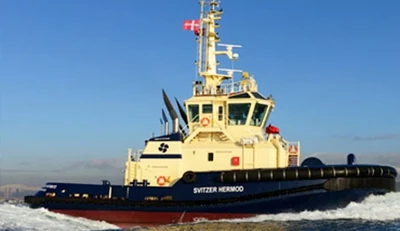 D Type Rubber Fenders with Fender FrameDecember 16, 2024view
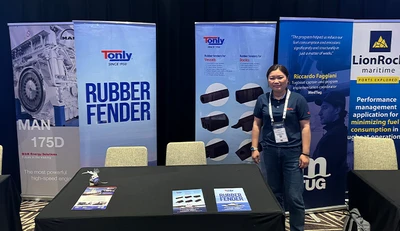 TONLY Participates International Tug & Salvage Community 2025March 11, 2025TONLY Participates International Tug & Salvage Community 2025view
 Transportation method of tug fenderDecember 16, 2024If many customers choose tug fenders, transportation is the key. How to choose the transportation method that suits you is a problem that needs to be solved.(1) Deflated air transportationAdvantages: ...view
 Rubber fenders with fender panelsDecember 16, 2024A fender panel is a frame made primarily of steel, which is fixed to the front of a rubber fender to lower the average face pressure. A rubber fender with a panel has the disadvantages of complex desi...view
 English
  français
  Español
  русский
  Türkçe