
Rubber fenders in the vulcanising agent diffusion due to the solubility of rubber, so in and between the two phases of the system, the vulcanising agent diffusion occurs migration, at a certain temperature is usually transferred to the vulcanising agent solubility of the rubber phase, after reaching the distribution coefficient to reach an equilibrium state. The diffusion of the vulcanising agent and other compatibilisers is very fast and the concentration difference in the same rubber can be eliminated in a short time.
In other words, there is a close relationship between good and bad rubber fenders with materials and the vulcanisation system. When two kinds of rubber together, if the vulcanization system used by the two is the same or with co-vulcanization, then for the same vulcanization system, the solubility of the vulcanizing agent and the diffusion of differences. When vulcanising, the vulcanising agent favours the rubber with the greater diffusion concentration, so the vulcanisation rate is accelerated. As a result, two rubbers, over-sulphurised or un-sulphurised, co-exist, forming an inhomogeneous vulcanisation between the heterogeneous phases, and in order to improve the ozone resistance of the diene-based rubber with which the physical properties of the rubber are reduced, the mixture is substantially improved, and the addition of sulphur also improves the fatigue and flexural resistance of the combined system.
In addition, the addition of a third component to the compounding system or an increase in the degree of unsaturation, for example from 1.8% to 18% for isoprene, can improve the compounding properties of diene rubbers. Alternatively, the introduction of unsaturated groups into the acrylic rubber backbone allows co-vulcanisation with sulphur. By using hydroxymethylated resins and nitrile rubber in combination, products with high tensile strength and high hardness can be obtained. Chemical reactions in rubber are also used. Natural rubber and butadiene rubber are combined with a cross-linking reaction, natural rubber and bupropylene rubber without a cross-linking reaction. There is also a cross-linking reaction in the combined system of polyurethane rubber and bupropylene rubber.
 All you need to know about marine rubber fenders?December 16, 2024What exactly are marine rubber fenders? For the ordinary person, it may seem weird to have so many weird-looking shapes hovering beside a port or harbour, unclear of what they are for. Even when a pe...view
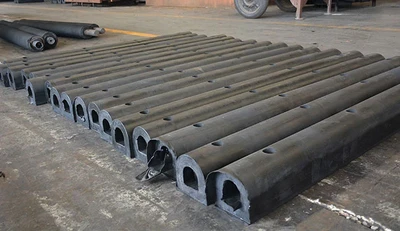 How to measure rubber fender?December 16, 2024A rubber fender is a shock absorber installed on a quay to absorb the berthing energy of a ship to cushion the impact. In the the past, before rubber fenders that could effectively absorb mooring ener...view
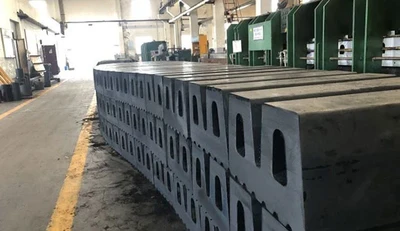 Four methods to repair damaged tug fenderDecember 16, 2024The main raw materials of tugboat fenders are natural rubber compound and rubber nylon cord, which can avoid tearing, damage, scratching, puncture and other parts during use. Our rubber fenders are re...view
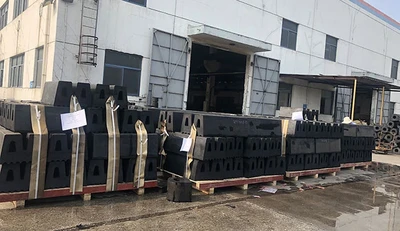 Co-vulcanisation and dispersion with rubber fendersDecember 16, 2024At the same vulcanisation speed, general purpose rubber is fastest with natural rubber, followed by isoprene rubber, butadiene rubber, latex polybutadiene rubber and styrene butadiene rubber. Slow vul...view
 English
  français
  Español
  русский
  Türkçe