
The vulcanization pressure refers to the pressure per unit area of the rubber product during the vulcanization process. Except for thin-walled products such as tape, other rubber products require a certain amount of pressure during vulcanization. The pressure effect of vulcanization mainly has the following points:
1. Prevent the formation of bubbles during the vulcanization process of the rubber marine fender and improve the compactness of the rubber.
During vulcanization, the rubber contains water and other volatile substances, as well as hydrogen sulfide gas that may be formed during the vulcanization reaction, which volatilize and escape at high temperatures, causing the rubber to generate bubbles. If a vulcanization pressure greater than the internal pressure of the rubber compound may be applied during vulcanization, the generation of bubbles can be prevented and the compactness of the rubber compound can be improved.
2. Make the rubber ship fender easy to flow and fill the mold cavity
In order to make rubber products with clear and full patterns, the rubber must be able to flow and fill the cavity. Especially when the compound is in the uncrosslinked state during the vulcanization induction period, the effect of vulcanization pressure is more obvious. Experiments show that for molded rubber products, if the vulcanization temperature is 100-140℃, the vulcanization pressure should be within the range of 2-4.9MPA.
3. Improve the adhesion between the rubber fender and the cloth layer
During vulcanization, as the vulcanization pressure increases, the depth of rubber penetration into the cloth layer increases, which can improve the adhesion between the rubber and the cloth layer and the flexural resistance of the rubber marine fender.
4. It helps to improve the physical and mechanical properties of vulcanized rubber
Experiments have shown that with 5MPA pressure vulcanization, its wear resistance is 10%-20% higher than the general 2MPA vulcanized rubber marine fender. This is because increasing the vulcanization pressure can increase the compactness of the vulcanizate. However, too high vulcanization pressure will also be detrimental to the performance of rubber, because high pressure, like high temperature, will accelerate the pyrolysis of rubber molecules. In addition, the structure of textile materials under high pressure will also be damaged, resulting in a decrease in flex resistance.
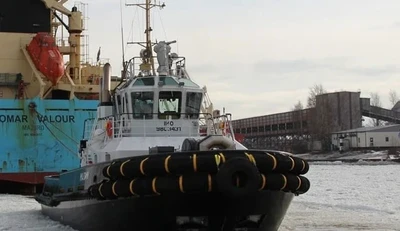 Diffusivity of vulcanising agents in rubber fendersDecember 16, 2024Rubber fenders in the vulcanising agent diffusion due to the solubility of rubber, so in and between the two phases of the system, the vulcanising agent diffusion occurs migration, at a certain temper...view
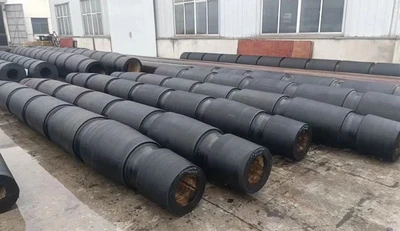 Exploring Tonly's Superior Fender Solutions: Cylindrical, D Type, and W Type Rubber FendersJune 13, 2023When it comes to ensuring the safety and longevity of both vessels and marine structures, choosing the right fender system is crucial. Fenders act as the first line of defense, absorbing impacts and m...view
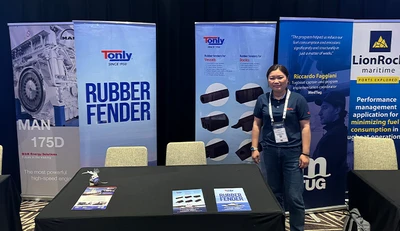 TONLY Participates International Tug & Salvage Community 2025March 11, 2025TONLY Participates International Tug & Salvage Community 2025view
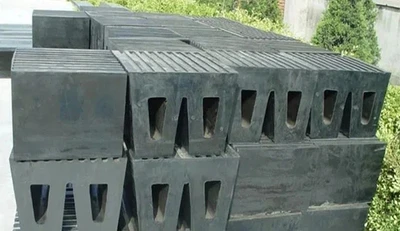 Unleashing the Power of Tug & Boat Rubber FendersOctober 17, 2024Tug & Boat Rubber Fenders are essential components in the maritime industry, providing critical protection for vessels during docking and maneuvering. Tonly Rubber, a reputable brand known for its...view
 English
  français
  Español
  русский
  Türkçe