
Selecting the appropriate rubber fenders for marine applications requires understanding how different designs perform under specific conditions. While cylindrical rubber fenders offer excellent all-around performance, other types like D, W, and square fenders excel in specialized applications. This comprehensive guide compares these major fender types to help you make an informed decision for your vessel or dock.
Before diving into comparisons, it's essential to understand what each fender type brings to marine protection:
The versatile workhorse of marine protection, cylindrical fenders feature a simple, round design that provides consistent performance across various applications. Their symmetrical shape allows for multi-directional impact absorption and easy rotation for even wear distribution.
Characterized by their distinctive "D" shape with a flat mounting surface, these fenders offer excellent energy absorption in a compact design. Their flat back allows for secure mounting against dock walls or vessel sides.
These fenders feature a double-arch design that provides higher energy absorption relative to their size. The "W" shape creates additional deflection capacity, making them suitable for applications with significant berthing energy.
With their flat contact surfaces, square fenders provide maximum contact area and are particularly effective for parallel berthing applications where large surface coverage is needed.
Fender Type | Energy Absorption Efficiency | Reaction Force Profile | Best For |
Cylindrical | High, with smooth progressive resistance | Lower initial reaction, builds progressively | General purpose applications, variable impact angles |
D-Type | Very high per unit size | Higher initial reaction force | High-energy berthing where space is limited |
W-Type | Highest among standard types | Progressive, with excellent energy distribution | Large vessels, high-energy ports, heavy impacts |
Square | Moderate to high (depends on compression) | Higher reaction due to flat surface contact | Parallel berthing, situations requiring maximum contact area |
Data based on standard marine fender performance curves and industry testing.
Cylindrical boat fenders shine in installation simplicity. Their symmetrical design allows for multiple mounting options and easy rotation to distribute wear evenly. This translates to lower maintenance costs and longer service intervals.
D-type fenders, while offering secure flat-back mounting, require precise alignment and cannot be rotated for even wear distribution. Their specialized shape may also limit mounting flexibility in some applications.
W-type fenders typically require professional installation due to their complex stress distribution patterns. Their specialized design often means higher installation costs but excellent long-term performance in demanding environments.
Square fenders offer straightforward flat-surface mounting but lack the self-aligning features of cylindrical designs. Their corners can experience uneven wear in certain applications.
The simplicity of cylindrical marine fenders contributes to their exceptional durability. Without complex internal structures or stress concentration points, they typically offer longer service life with minimal degradation in performance.
's cylindrical rubber fenders benefit from homogeneous construction that withstands environmental stresses uniformly.
D-type and W-type fenders, while durable, may experience stress concentration at design transitions. Square fenders can suffer corner wear in high-traffic applications, potentially reducing their effective lifespan.
For busy commercial ports handling diverse vessel types, cylindrical fenders offer unmatched versatility. Their ability to accommodate different berthing angles and vessel sizes makes them ideal for multi-use docks. W-type fenders may be preferred for dedicated terminals serving consistently large vessels.
Cylindrical boat fenders are typically the best choice for recreational marinas due to their:
Easy installation on floating docks
Gentle contact with various hull types
Cost-effectiveness for multiple slip configurations
Minimal maintenance requirements
For offshore applications where space is constrained and impacts can be severe, D-type and W-type fenders often provide higher energy absorption in compact designs. However, cylindrical marine fenders remain excellent for general supply vessel interfaces and areas requiring multi-directional protection.
High-frequency operations benefit from the durability and low maintenance of cylindrical rubber fenders. Their ability to withstand constant impacts without performance degradation makes them cost-effective for terminals with frequent docking operations.
Most Economical: Cylindrical fenders typically offer the lowest initial cost per unit of protection
Premium Investment: W-type and specialized D-type fenders command higher initial prices due to complex manufacturing
When considering total cost of ownership, cylindrical fenders often provide superior value through:
Longer service life due to even wear distribution
Lower maintenance costs from simple design and easy inspection
Reduced replacement frequency thanks to durable homogeneous construction
Flexibility that avoids specialized replacement part requirements
Cost Factor | Cylindrical | D-Type | W-Type | Square |
Installation Complexity | Low | Medium | High | Low-Medium |
Maintenance Frequency | Low | Medium | Medium | Medium |
Expected Service Life | 15-25 years | 10-20 years | 15-25 years | 10-20 years |
Replacement Flexibility | High (standard sizing) | Medium | Low (often custom) | Medium |
Unlike flat-backed designs, cylindrical marine fenders provide equal protection regardless of impact angle. This is particularly valuable in locations with tidal variations, currents, or multiple vessel types.
From simple rope lashings to advanced chain systems, cylindrical designs accommodate diverse mounting requirements without specialized hardware.
The circular cross-section of cylindrical rubber fenders ensures consistent performance as they compress, providing predictable energy absorption across their full deflection range.
Tonly's cylindrical fenders have demonstrated reliability across global applications, from tropical ports to Arctic facilities, thanks to their resistance to environmental stresses and uniform material properties.
Multiple vessel types using the same berth
Limited budget with need for reliable protection
Situations requiring easy maintenance and inspection
Applications where installation flexibility is valuable
Environments with variable impact angles
Extremely high energy absorption requirements in constrained spaces (consider W-type)
Dedicated berths for specific large vessel types (may benefit from custom designs)
Applications requiring maximum flat surface contact (square might be preferable)
Specialized mounting situations where flat-back designs offer advantages
With over 60 years of rubber engineering experience, Tonly has refined cylindrical rubber fender technology to deliver optimal performance. Our advantages include:
Advanced Material Science: Proprietary rubber compounds optimized for marine environments
Precision Manufacturing: Consistent quality through controlled vulcanization processes
Comprehensive Testing: Rigorous performance validation against international standards
Technical Support: Expert guidance on selection, installation, and maintenance
Our cylindrical fenders undergo extensive quality control, including:
Material homogeneity testing
Compression and recovery validation
Environmental resistance certification
Real-world performance monitoring
What vessel types and sizes will use the facility?
Multiple types → Cylindrical fenders
Single large vessel type → Consider specialized designs
What are your maintenance capabilities and budget?
Limited maintenance resources → Cylindrical fenders
Professional maintenance teams → More flexibility in choice
How critical is installation speed and simplicity?
Quick installation needed → Cylindrical fenders
Complex, engineered installations → All options possible
What is your total budget including long-term costs?
Balanced initial and ongoing costs → Cylindrical fenders
Maximum performance regardless of cost → Premium specialized types
While each fender type has its place in marine protection, cylindrical rubber fenders offer the most balanced combination of performance, durability, and value for the majority of applications. Their versatility, ease of maintenance, and cost-effectiveness make them the preferred choice for ports, marinas, and offshore facilities worldwide.
At Tonly, we specialize in manufacturing high-quality cylindrical marine fenders that deliver reliable protection across diverse operating conditions. Our engineering team can help you determine whether cylindrical fenders are optimal for your specific needs or if a specialized design might offer advantages.
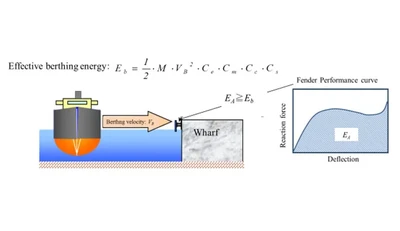 The role of rubber fenders part 1December 16, 2024A rubber fender is a shock absorber installed on a wharf to absorb the berthing energy of a vessel. Timber and old tires were used as shock absorbers until the first rubber fenders were developed in t...view
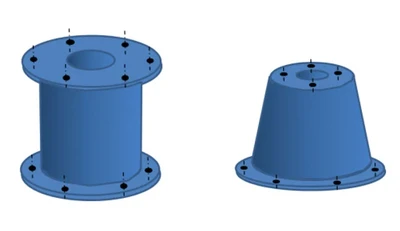 Rubber fenders with fender panelsDecember 16, 2024A fender panel is a frame made primarily of steel, which is fixed to the front of a rubber fender to lower the average face pressure. A rubber fender with a panel has the disadvantages of complex desi...view
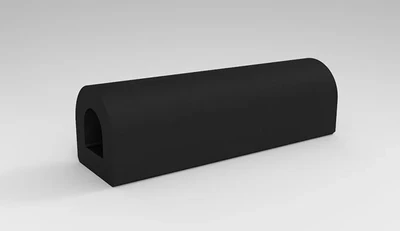 Stability of D-type rubber fenderDecember 16, 2024The quality of D-type rubber fenders always restricts production and use, interferes with docking and the safety of ship drivers, and affects the schedule of production ships. This is not an accidenta...view
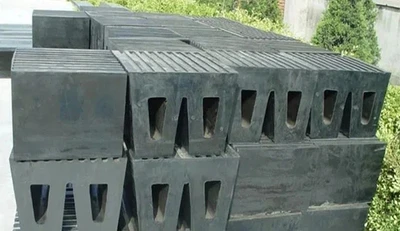 Unleashing the Power of Tug & Boat Rubber FendersOctober 17, 2024Tug & Boat Rubber Fenders are essential components in the maritime industry, providing critical protection for vessels during docking and maneuvering. Tonly Rubber, a reputable brand known for its...view
 English
  français
  Español
  русский
  Türkçe