
In the demanding environment of maritime operations, especially for tugboats and workboats, selecting the right fendering system is not just about protection—it's about operational efficiency and longevity. Among the various profiles available, Keyhole Fenders have emerged as the premier choice for vessels requiring heavy-duty, high-impact resistance in a compact design.
Keyhole fenders are named after their unique "keyhole" shaped internal hollow, which allows them to absorb significant energy while remaining easy to install on curved surfaces like the bow or stern of a tug. According to GSC search trends, marine engineers are increasingly looking for high-impact rubber fenders that can withstand extreme shear forces during pushing and pulling maneuvers.
Superior Energy Absorption: The internal hollow design allows for controlled deformation.
Versatility: Ideal for both Tug Boat Rubber Fenders and port wharves.
Durability: Made from high-abrasion-resistant rubber compounds that resist UV and seawater degradation.
To help you make an informed decision, the following table compares Keyhole fenders with other common profiles like W-Type Rubber Fenders and Cylindrical Rubber Fenders.
Feature | Keyhole Fender | W-Type Fender | Cylindrical Fender |
Primary Use | Tug Bow/Stern & Quays | Heavy-duty Tug Pushing | General Berthing & Docks |
Energy Absorption | High | Very High | Medium |
Installation Ease | Moderate (Bolted) | Complex | Simple (Chains/Bars) |
Curvature Adaptability | Excellent | Fair | Good |
Common Application | Ocean-going Tugs | Multi-purpose Vessels |
For ultra-high-traffic areas, Tonly recommends combining rubber profiles with UHMWPE Marine Fender Panels. By adding a low-friction UHMW-PE face to the fender system, you significantly reduce the friction coefficient between the vessel and the fender, further extending the service life of both the fender and the ship's hull. This is a critical factor for marine fender manufacturers aiming for "maintenance-free" solutions.
As highlighted in our guide on how to measure rubber fenders, precision is key. For Keyhole fenders:
Curve Fitting: Ensure the fender is pre-curved if the radius of the tug bow is tight.
Fixing: Use galvanized or stainless steel bolts through the keyhole center for maximum stability.
Inspection: Regularly check for bolt tension, especially after high-impact docking. For more details, see our article on four methods to repair damaged tug fenders.
A: Keyhole fenders offer a larger contact surface and higher energy absorption relative to their size compared to D-Type Rubber Fenders. Their shape makes them more stable under shear loads, which is frequent in tug operations.
A: Yes. As a leading marine rubber fender manufacturer, Tonly provides customized lengths, radii, and mounting hole patterns to fit specific vessel designs or dock requirements.
A: With proper installation and regular inspection, a high-quality rubber fender from Tonly can last 10-15 years, depending on the frequency of use and environmental conditions.
Looking for a reliable fender supplier? As a specialized China rubber fender factory, Tonly provides BV and ABS-certified solutions for global maritime projects. Contact our technical team today for a customized quote on Keyhole or Super Cell Rubber Fenders.
 What is a Composite Rubber Fender? Key Benefits vs. Traditional Rubber FendersDecember 10, 2025Introduction: The Evolution of Marine FenderingIn the demanding world of marine infrastructure, where ports, docks, and vessels face constant impacts from waves, tides, and berthing operations, protec...view
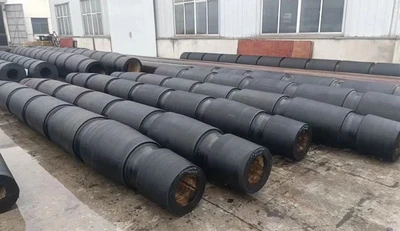 Exploring Tonly's Superior Fender Solutions: Cylindrical, D Type, and W Type Rubber FendersJune 13, 2023When it comes to ensuring the safety and longevity of both vessels and marine structures, choosing the right fender system is crucial. Fenders act as the first line of defense, absorbing impacts and m...view
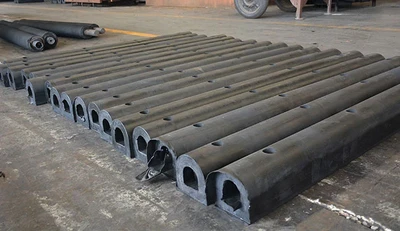 Transportation method of tug fenderDecember 16, 2024If many customers choose tug fenders, transportation is the key. How to choose the transportation method that suits you is a problem that needs to be solved.(1) Deflated air transportationAdvantages: ...viewCylindrical vs. Other Fender Types: Your Complete Comparative GuideDecember 17, 2025Introduction: Choosing the Right Marine ProtectionSelecting the appropriate rubber fenders for marine applications requires understanding how different designs perform under specific conditions. While...view
 EN
EN